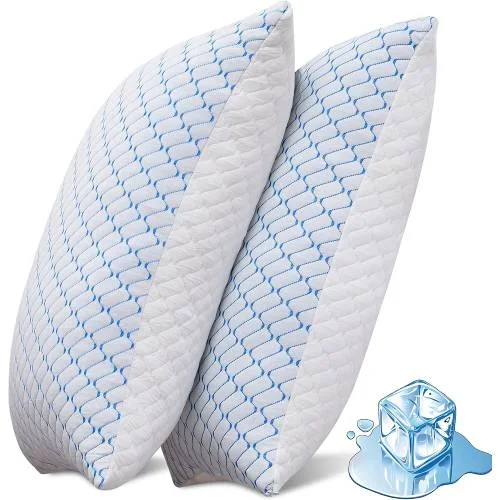

Side sleeping is popular, comfortable and, for many people, the position they naturally settle into. The catch is that it leaves a sizable gap between your head and the mattress. A good pillow fills that gap so your neck stays straight; the wrong one leaves you stiff in the morning.
Three things to check
1. Height
Side sleepers generally need a pillow with medium-high to high loft. Broader shoulders call for more height; a soft mattress that lets your shoulder sink in calls for slightly less.
2. Firmness
A medium-firm pillow holds your head at the same height all night. Very soft pillows tend to compress, letting your head drop.
3. Filling
- Memory foam: contours closely and stays supportive; choose a cooling cover if you run hot.
- Shredded foam: adjustable, so you can fine-tune the height.
- Latex: buoyant, durable and naturally breathable.
- Down or alternatives: very soft, but usually too flat for side sleepers on their own.
A simple at-home test
Lie on your side in your usual position and ask someone to look at you from behind. Your head should sit level, with your nose roughly in line with the middle of your chest. If your head tilts down, you need more height; if it tilts up, less.
Make the whole bed work for you
- A pillow between your knees keeps your hips and lower back aligned.
- Breathable cotton sheets help you stay comfortable with foam pillows.
- Give a new pillow about two weeks before deciding whether it suits you.
Time for a new one?
If your pillow is lumpy, stays folded when you fold it in half or leaves you with a stiff neck, it has probably lost its support and should be replaced.